A triad standing alone is entirely indefinite in its harmonic meaning; it may be the tonic of one tonality or one degree of several others. The addition of one or more other triads can restrict its meaning to a lesser number of tonalities. A certain order promotes such a succession of chords to the function of a progression.
A succession is aimless; a progression aims for a definite goal. Whether such a goal may be reached depends on the continuation. It might promote this aim; it might counteract it.
A progression has the function of establishing or contradicting a tonality. The combination of harmonies of which a progression consists depends on its purpose-whether it is establishment, modulation, transition, contrast, or reaffirmation.
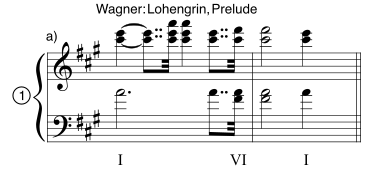
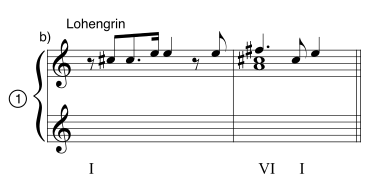
A succession of chords may be functionless, neither expressing an unmistakable tonality nor requiring a definite continuation. Such successions are frequently used in descriptive music (see Ex. I).
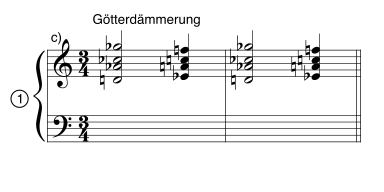
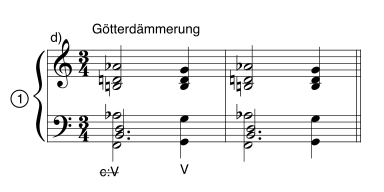
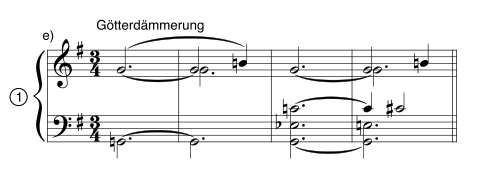
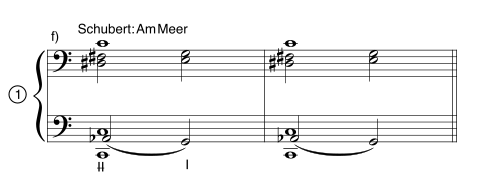
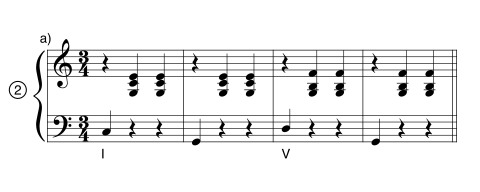
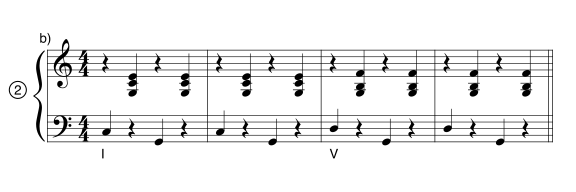
The harmony of popular music often consists only of a mere interchange of tonic and dominant (Ex. 2), in higher forms concluded by a cadence. Though a mere interchange is primitive, it still has the function of expressing a tonality. Ex. 3 illustrates beginnings with mere interchange of I-IV, I-II, and even I-IV of the submediant region 1